

Сценические искусства и литературное творчество
Найдено 1343 издания:
Сохранить список:
Excel
Excel
Закрыть
Выгрузка списка книг доступна только авторизованным пользователям. Авторизоваться

Книга выдающегося театрального инженера и историка Николая Павловича Извекова (1886–1942) является фундаментальным классическим трудом, заложившим основы научного подхода к сценографии и театральной технологии в СССР.
В издании впервые детально систематизированы и описаны инженерно-технические аспекты устройства театрального здания и сценического пространства. Рассматривается архитектура сценической коробки, классификация игровых площадок, механическое оборудование сцены. В данном издании частично воспроизведены иллюстрации из книги 1940 года. Соответствует современным требованиям Федерального государственного образовательного стандарта среднего профессионального образования и профессиональным квалификационным требованиям.
Предназначено для студентов и преподавателей средних специальных учебных заведений.
The book by Nikolai Pavlovich Izvekov (1886–1942), the prominent theatre engineer and historian is a basic work that laid the foundations for a scholar approach to scenography and theatre technology in the USSR.
The edition provides the first detailed systematization and description of the engineering and technical aspects of theatre building design and stage space. The author examines the stage house architecture, the classification of performance areas, and stage machinery. The current edition includes reproductions of some illustrations from the original 1940 edition. Corresponds to the modern requirements of the Federal State Educational Standard of Secondary Vocational Education and professional qualification requirements.
It is addressed for students and teachers of colleges.
В издании впервые детально систематизированы и описаны инженерно-технические аспекты устройства театрального здания и сценического пространства. Рассматривается архитектура сценической коробки, классификация игровых площадок, механическое оборудование сцены. В данном издании частично воспроизведены иллюстрации из книги 1940 года. Соответствует современным требованиям Федерального государственного образовательного стандарта среднего профессионального образования и профессиональным квалификационным требованиям.
Предназначено для студентов и преподавателей средних специальных учебных заведений.
The book by Nikolai Pavlovich Izvekov (1886–1942), the prominent theatre engineer and historian is a basic work that laid the foundations for a scholar approach to scenography and theatre technology in the USSR.
The edition provides the first detailed systematization and description of the engineering and technical aspects of theatre building design and stage space. The author examines the stage house architecture, the classification of performance areas, and stage machinery. The current edition includes reproductions of some illustrations from the original 1940 edition. Corresponds to the modern requirements of the Federal State Educational Standard of Secondary Vocational Education and professional qualification requirements.
It is addressed for students and teachers of colleges.

Пособие рассчитано на занятия ритмикой, музыкальными и танцевально-ритмическими упражнениями с детьми от 3 до 7 лет. Издание оснащено CD-диском с номерами, представленными в книге.
Адресовано педагогам детских садов и студий, ДМШ и ДШИ, студентам педагогических отделений ссузов и вузов, а также родителям.
The textbook is designed for lessons in rhythm, music and dance and rhythmic exercises with children from 3 to 7 years old. The edition is supplied with a CD with the numbers presented in the book.
Addressed to teachers of kindergartens and studios, children's music schools and children's schools of arts, students of pedagogical departments of colleges and universities, as well as parents.
Адресовано педагогам детских садов и студий, ДМШ и ДШИ, студентам педагогических отделений ссузов и вузов, а также родителям.
The textbook is designed for lessons in rhythm, music and dance and rhythmic exercises with children from 3 to 7 years old. The edition is supplied with a CD with the numbers presented in the book.
Addressed to teachers of kindergartens and studios, children's music schools and children's schools of arts, students of pedagogical departments of colleges and universities, as well as parents.

Пособие рассчитано на занятия ритмикой, музыкальными и танцевально-ритмическими упражнениями с детьми от 3 до 7 лет. Издание оснащено CD-диском с номерами, представленными в книге.
Адресовано педагогам детских садов и студий, ДМШ и ДШИ, студентам педагогических отделений ссузов и вузов, а также родителям.
The textbook is designed for lessons in rhythm, music and dance and rhythmic exercises with children from 3 to 7 years old. The edition is supplied with a CD with the numbers presented in the book.
Addressed to teachers of kindergartens and studios, children's music schools and children's schools of arts, students of pedagogical departments of colleges and universities, as well as parents.
Адресовано педагогам детских садов и студий, ДМШ и ДШИ, студентам педагогических отделений ссузов и вузов, а также родителям.
The textbook is designed for lessons in rhythm, music and dance and rhythmic exercises with children from 3 to 7 years old. The edition is supplied with a CD with the numbers presented in the book.
Addressed to teachers of kindergartens and studios, children's music schools and children's schools of arts, students of pedagogical departments of colleges and universities, as well as parents.
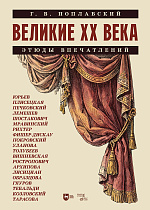
Герман Викторович Поплавский, многолетний зритель-слушатель, писатель, музыкальный критик, в настоящем издании делится своими впечатлениями и воспоминаниями о живых встречах и творчестве гигантов отечественного и зарубежного искусства, внесших неоценимый вклад в его развитие. Уникальная особенность книги заключается в том, что автор предоставляет возможность читателям проникнуться и заразиться творчеством и личностью своих знаменитых героев, чьим слушателем и собеседником автору довелось быть. Плисецкая, Печковский, Козловский, Софроницкий, Лемешев, Мравинский, Рихтер, Уланова, Товстоногов, Смоктуновский, Образцова, Колпакова, Темирканов, Гергиев, Фрейндлих и др. По мнению автора именно художественные впечатления современников являются результатом творчества самого художника на сцене и в жизни и представляют интерес для будущих поколений.
Издание адресовано профессионалам и любителям искусства.
German Viktorovich Poplavsky, a longtime spectator, author, and music crit-ic, shares his impressions and recollections of encounters and the work of giants of Russian and international art who have made a valuable contribu-tion to its development. The book’s unique feature is that the author allows readers to get involved and inspired by the work and personalities of his celebrated heroes, whose listener and interviewer he had the privilege to be. These are Plisetskaya, Pechkovsky, Kozlovsky, Sofronitsky, Lemeshev, Mravinsky, Richter, Ulanova, Tovstonogov, Smoktunovsky, Obraztsova, Kolpakova, Temirkanov, Gergiev, Freundlich, and others. The author be-lieves that it is the artistic impressions of contemporaries that are the result of the artist’s own stage and life art and are of interest to future generations.
This edition is intended for professionals and art lovers.
Издание адресовано профессионалам и любителям искусства.
German Viktorovich Poplavsky, a longtime spectator, author, and music crit-ic, shares his impressions and recollections of encounters and the work of giants of Russian and international art who have made a valuable contribu-tion to its development. The book’s unique feature is that the author allows readers to get involved and inspired by the work and personalities of his celebrated heroes, whose listener and interviewer he had the privilege to be. These are Plisetskaya, Pechkovsky, Kozlovsky, Sofronitsky, Lemeshev, Mravinsky, Richter, Ulanova, Tovstonogov, Smoktunovsky, Obraztsova, Kolpakova, Temirkanov, Gergiev, Freundlich, and others. The author be-lieves that it is the artistic impressions of contemporaries that are the result of the artist’s own stage and life art and are of interest to future generations.
This edition is intended for professionals and art lovers.
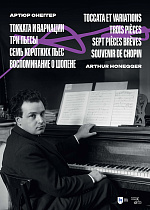
Артюр Онеггер (Arthur Honegger, 1892–1955) — композитор, музыкальный критик, участник «Шестерки» (Groupe des Six — группа французских композиторов 1910–1920-х гг.).
Настоящее издание впервые объединяет под одной обложкой ключевые фортепианные сочинения Онеггера. «Токката и вариации» (1916) — масштабное, виртуозное полотно раннего периода. «Три пьесы» (1915–1919) — контрастный триптих с поэтичным «Посвящением Морису Равелю», «Семь коротких пьес» (1919–1920) — афористичный цикл, отражающий эстетику парижского авангарда, «Воспоминание о Шопене» (1947) — пьеса позднего периода, требующая от пианиста безупречного владения кантиленой.
Сборник адресован студентам музыкальных училищ и консерваторий, профессиональным исполнителям, а также широкому кругу любителей фортепианной музыки XX века.
Arthur Honegger (1892–1955) was a composer, music critic, and member of the Groupe des Six (a group of French composers from the 1910s–1920s).
This edition brings together for the first time the collection of main piano works by Honegger. Toccata et Variations (Toccata and Variations, 1916) is a large and virtuoso piece from his early period; Trois pièces (Three Pieces, 1915–1919) is a contrasting triptych with the poetic Hommage à Maurice Ravel; Sept pièces brèves (Seven Short Pieces, 1919–1920) is an aphoristic cycle reflecting the aesthetics of the Parisian avant-garde; and Souvenir de Chopin (1947) is a piece from his late period, demanding the pianist’s perfect cantilena technique.
The collection is addressed to students of music colleges and higher schools, performing musicians, as well as for a wide range of 20th century piano music lovers.
Настоящее издание впервые объединяет под одной обложкой ключевые фортепианные сочинения Онеггера. «Токката и вариации» (1916) — масштабное, виртуозное полотно раннего периода. «Три пьесы» (1915–1919) — контрастный триптих с поэтичным «Посвящением Морису Равелю», «Семь коротких пьес» (1919–1920) — афористичный цикл, отражающий эстетику парижского авангарда, «Воспоминание о Шопене» (1947) — пьеса позднего периода, требующая от пианиста безупречного владения кантиленой.
Сборник адресован студентам музыкальных училищ и консерваторий, профессиональным исполнителям, а также широкому кругу любителей фортепианной музыки XX века.
Arthur Honegger (1892–1955) was a composer, music critic, and member of the Groupe des Six (a group of French composers from the 1910s–1920s).
This edition brings together for the first time the collection of main piano works by Honegger. Toccata et Variations (Toccata and Variations, 1916) is a large and virtuoso piece from his early period; Trois pièces (Three Pieces, 1915–1919) is a contrasting triptych with the poetic Hommage à Maurice Ravel; Sept pièces brèves (Seven Short Pieces, 1919–1920) is an aphoristic cycle reflecting the aesthetics of the Parisian avant-garde; and Souvenir de Chopin (1947) is a piece from his late period, demanding the pianist’s perfect cantilena technique.
The collection is addressed to students of music colleges and higher schools, performing musicians, as well as for a wide range of 20th century piano music lovers.
Книга выдающегося театрального инженера и историка Николая Павловича Извекова (1886–1942) является фундаментальным классическим трудом, заложившим основы научного подхода к сценографии и театральной технологии в СССР.
В издании впервые детально систематизированы и описаны инженерно-технические аспекты устройства театрального здания и сценического пространства. Рассматривается архитектура сценической коробки, классификация игровых площадок, механическое оборудование сцены.
В данном издании частично воспроизведены иллюстрации из книги 1940 года.
The book by Nikolai Pavlovich Izvekov (1886–1942), the prominent theatre engineer and historian is a basic work that laid the foundations for a scholar approach to scenography and theatre technology in the USSR.
The edition provides the first detailed systematization and description of the engineering and technical aspects of theatre building design and stage space. The author examines the stage house architecture, the classification of performance areas, and stage machinery.
The current edition includes reproductions of some illustrations from the original 1940 edition.
В издании впервые детально систематизированы и описаны инженерно-технические аспекты устройства театрального здания и сценического пространства. Рассматривается архитектура сценической коробки, классификация игровых площадок, механическое оборудование сцены.
В данном издании частично воспроизведены иллюстрации из книги 1940 года.
The book by Nikolai Pavlovich Izvekov (1886–1942), the prominent theatre engineer and historian is a basic work that laid the foundations for a scholar approach to scenography and theatre technology in the USSR.
The edition provides the first detailed systematization and description of the engineering and technical aspects of theatre building design and stage space. The author examines the stage house architecture, the classification of performance areas, and stage machinery.
The current edition includes reproductions of some illustrations from the original 1940 edition.
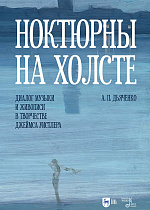
Книга посвящена взаимодействию музыкальных и живописных приемов в творчестве выдающегося американского живописца Джеймса Уистлера (1834–1903). Большое внимание уделяется жанру ноктюрна в музыке и изобразительном искусстве.
Предназначается широкому кругу читателей, интересующихся творчеством художника, а также такими вопросами как синтез искусств, музыка и живопись и диалог национальных культур.
The author studies the interplay of musical and pictorial techniques in the work of the distinguished American artist James Whistler (1834–1903). A particular attention is paid to the nocturne genre in music and visual art.
The book is intended for a wide range of readers interested in the artist’s work, as well as issues such as the synthesis of the arts, music and painting, and the dialogue of national cultures.
Предназначается широкому кругу читателей, интересующихся творчеством художника, а также такими вопросами как синтез искусств, музыка и живопись и диалог национальных культур.
The author studies the interplay of musical and pictorial techniques in the work of the distinguished American artist James Whistler (1834–1903). A particular attention is paid to the nocturne genre in music and visual art.
The book is intended for a wide range of readers interested in the artist’s work, as well as issues such as the synthesis of the arts, music and painting, and the dialogue of national cultures.
В данном учебном пособии излагается курс истории мирового искусства, в котором искусство понимается не как роскошь или развлечение, а как фундаментальная потребность и инструмент человеческого духа: оно нужно, чтобы говорить о самом сокровенном, чувствовать и быть живым, помнить и передавать опыт, объединяться с другими, понимать себя и мир вокруг, искать смысл жизни и оставлять свой след в мире; без искусства человек не был бы тем, кто он есть, — это то, что делает нас людьми. Причины его существования обусловлены врожденной потребностью в красоте, возможностью сказать то, что нельзя выразить словами, необходимостью самопознания и исцеления, быть клеем общества, поиском смысла жизни, выступать альтернативным науке способом познания мира. В учебном пособии на основе новейших исследований по теории и истории искусства и оригинальных эстетических концепций излагается история искусства в контексте цивилизаций и культур, начиная с его первобытных истоков и кончая настоящим временем, в котором динамично развивается информационно-сетевое общество с его традиционным и цифровым искусством, взаимодействующим с новейшими технологиями.
Учебное пособие носит энциклопедический характер и рассчитано на студентов, аспирантов и преподавателей вузов всех специальностей и направлений подготовки и всех интересующихся проблемами истории мирового искусства.
Учебное пособие носит энциклопедический характер и рассчитано на студентов, аспирантов и преподавателей вузов всех специальностей и направлений подготовки и всех интересующихся проблемами истории мирового искусства.
Учебное пособие является плодом многолетней работы автора над осмыслением тем и проблем общей культурологии. От этой большой дисциплины отходят множество других предметов, среди которых можно выделить историю мировой и отечественной культуры. Так как предметное поле и этой дисциплины необъятно, то автор ограничил себя культурами народов России и западноевропейских государств, чье влияние на культуру России оказалось наиболее значительным.
Соответствует современным требованиям Федерального государственного образовательного стандарта среднего профессионального образования и профессиональным квалификационным требованиям.
Учебное пособие предназначено для студентов профессиональных образовательных организаций тех направлений подготовки, где история мировой и отечественной культуры изучается в обязательном порядке. Но будет полезно для тех, кто изучает эту дисциплину как вариативную или по выбору. Более того, оно привлечет и широкого читателя, который проявляет личный интерес к изучению мировой и отечественной культуры, чтобы обогатить свою душу вечными образцами высокой духовности и развить в себе чувство прекрасного.
Соответствует современным требованиям Федерального государственного образовательного стандарта среднего профессионального образования и профессиональным квалификационным требованиям.
Учебное пособие предназначено для студентов профессиональных образовательных организаций тех направлений подготовки, где история мировой и отечественной культуры изучается в обязательном порядке. Но будет полезно для тех, кто изучает эту дисциплину как вариативную или по выбору. Более того, оно привлечет и широкого читателя, который проявляет личный интерес к изучению мировой и отечественной культуры, чтобы обогатить свою душу вечными образцами высокой духовности и развить в себе чувство прекрасного.
Учебное пособие является плодом многолетней работы автора над осмыслением тем и проблем общей культурологии. От этой всеобщей дисциплины отходят множество частных, среди которых особенно выделяется история мировой и отечественной культуры. Так как предметное поле и этой дисциплины необъятно, то автор ограничил себя культурами народов России и западноевропейских государств, чье влияние на развитие России оказалось наиболее значительным. Кроме того, описывая процессы, происходящие в культуре Западной Европы и России на фоне современных политических событий, автор понимал, как сложно абстрагироваться от собственных эмоций и идеологических предпочтений. Но настолько, насколько это возможно, автор постарался быть объективным и беспристрастным в своем анализе и оценках.
Учебное пособие рассчитано в первую очередь на студентов гуманитарных и творческих вузов и факультетов, где история мировой и отечественной культуры изучается в обязательном порядке. Но будет полезно для тех, кто изучает эту дисциплину как вариативную или по выбору. Более того, оно привлечет и широкого читателя, который проявляет личный интерес к изучению мировой и отечественной культуры, чтобы обогатить свою душу вечными образцами высокой духовности и развить в себе чувство прекрасного.
Учебное пособие рассчитано в первую очередь на студентов гуманитарных и творческих вузов и факультетов, где история мировой и отечественной культуры изучается в обязательном порядке. Но будет полезно для тех, кто изучает эту дисциплину как вариативную или по выбору. Более того, оно привлечет и широкого читателя, который проявляет личный интерес к изучению мировой и отечественной культуры, чтобы обогатить свою душу вечными образцами высокой духовности и развить в себе чувство прекрасного.
Закрыть
Сообщить о поступлении
Укажите ваш e-mail, и мы пришлем уведомление, как только книга
станет доступна для покупки.